
Mechanical
HVAC and fire fighting tools for cooling, airflow, ducts, chilled water, exhaust, sprinklers, pumps, tanks, and clean agent systems.
HVACFire Fighting
Open Mechanical

The site is divided into three main MEP branches: Mechanical, Electrical, and Plumbing.
HVAC and fire fighting tools for cooling, airflow, ducts, chilled water, exhaust, sprinklers, pumps, tanks, and clean agent systems.

Power, fire alarm, ELV, cable sizing, transformers, generators, CCTV, UPS, access control, and loop/battery planning.

Water demand, tanks, pumps, drainage sizing, hot water demand, and domestic water planning tools.
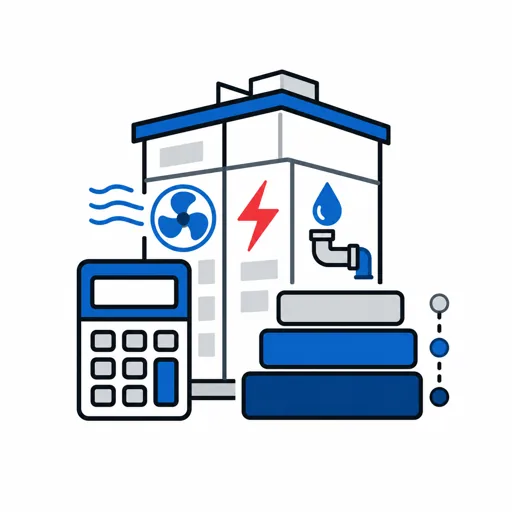
Budget, capex, energy waste, electrification readiness, and MEP due diligence tools for property and commercial decisions.
The category structure helps users move from broad MEP discipline to the exact calculator needed for a task. Mechanical pages cover HVAC and fire fighting checks, electrical pages cover power, fire alarm, and ELV planning, and plumbing pages cover water demand, tanks, pumps, drainage, and hot water. This structure keeps internal links clear for users and search engines.
Each category page also creates a clean crawl path from the homepage to every calculator before launch.
Use Mechanical when the task starts with cooling load, airflow, duct sizing, chilled water, exhaust, fire pump, sprinkler, clean agent, or fire water storage. Use Electrical when the task starts with cable sizing, voltage drop, breaker selection, transformer sizing, generator loading, fire alarm battery, loop loading, CCTV storage, rack UPS, or access control quantities. Use Plumbing when the task starts with water demand, pipe pressure drop, pump head, drainage slope, water tank capacity, or hot water demand.
These categories are meant for fast first-pass engineering checks, estimator review, coordination meetings, and tender-stage sanity checks. They are not a replacement for approved design software, local authority review, project specifications, manufacturer data, or a licensed engineer's final calculation. Start from a category, open the relevant calculator, load the sample data, then replace the sample values with project assumptions.